Showing posts with label History. Show all posts

Wednesday, 6 August 2025

Berkeley Castle

In early August 2025 my wife and I spent a mini break with the 'Bank House' hotel, Bransford, Worcs. as our base. Incidentally, there are some lovely walks to be taken from the hotel itself and we did just that - 'The Fold Nature Trail' in particular.

But this post is about our visit to Berkeley Castle in Gloucestershire. I first became aware of the Berkeley family name and the Castle on a visit to Jamestown VA., USA, in 2017. There we visited a plantation, located to the west of Jamestown, called Berkeley 100. 
As a result of this visit to Berkeley Castle I have renewed my research into how the plantation in Virginia got its name. One of its founders was Richard Berkeley but he was only one of a number of wealthy Gloucestershire and Bristol investors who established the colony in late 1619. They didn't necessarily go to Virginia themselves, they would have appointed representatives, one of these being Captain John Woodliffe. All that is a different, continuing story, this blog is about our visit to Berkeley castle.

Although Storm Floris mainly affected Scotland and northern England, we suffered rain and strong winds on our visit. It was a good job that most of the visit was indoors. The Berkeley family and the castle can trace its history back to the early years of the Norman Conquest, The lineage in fact, via the Fitzhardinge family, goes back to Saxon England. 

The castle is still owned and manged by a branch of the Berkeley family and what a very fine job they are making of it. If a castle could be described as being the equivalent of a "Rolls Royce", this would be it. From the guides, labelling, layout, the rich history itself, to the café, all are of a very high standard. As you probably gather by now, we loved it. It does help if you are interested in English history.
Here are a few of the photos I took -


For much much more you will have to visit yourself. You wont regret it.

Nick


Wednesday, 23 September 2020

Cholmondeley Castle and Gardens

 Originally we were going to Cholmondeley Castle and Gardens for a Classic Car event to be held on Sunday 20th September. However, like so many similar events this year it had to be cancelled because of renewed Covid-19 concerns.

I had booked three nights at the Rossett Hall Hotel and I was going to make the most of it. We had intended to have a look at the Cholmondeley Castle Gardens while at the Classic Car event, so, now we could spend more time doing that and exploring the vast Cholmondeley Estate with all its magnificent features.

This is what the Cholmondeley Castle and Gardens website says about the estate -

"The Cholmondeley family have lived on these lands since Norman times, with the castle built in the early 19th century by the 1st Marquess. Nestled within historic parkland our 70acres of beautiful gardens offer magnificent displays through the seasons and are filled with colour and botanical delights. Discover the romantic Temple and Folly Water Gardens, Rose Garden, Glade, Arboretum and the ornamental woodland upon Tower Hill. The newly created Lavinia Walk is a 100m long double herbaceous border and is dedicated to Lady Lavinia Cholmondeley and continues her legacy within the heart of the garden. The Castle and gardens also provide a stunning backdrop to a host of great events held throughout the year, offering something for everyone." 

At the end of our visit we felt that we had walked every inch of that part of the estate which is accessible to the public. It probably wasn't true but it certainly felt like, not in terms of feeling exhausted or having sore feet ("speak for yourself" says my wife) but in terms of all the different and varied things that we had seen. 

One thing that I must recall is the chance encounter I had with a local resident. She was walking her dog up towards the castle. After exchanging pleasantries, she told me that her late husband rode with the local hunt for twenty five years; Lady Lavinia, Marchioness of Cholmondeley rode in the same hunt. The lady I was talking to was full of praise and admiration for the late Lady Lavinia and pointed out that it was her and her husband, Hugh, the 6th Marquiss of Cholmondeley, who was responsible for restoring the castle and gardens to the magnificent order they are in today. It was an enchanting meeting, I wish I had been bold enough to ask the lady her name.

Let the following photos tell their own story -


The Estate Chapel


Nick

www.carsceneinternational.com

Beeston Castle

 Originally we were going to Cholmondeley Castle and Gardens for a Classic Car event to be held on Sunday 20th September. However, like so many similar events this year it had to be cancelled because of renewed Covid-19 concerns.

I had booked three nights at the Rossett Hall Hotel and I was going to make the most of it. We had intended to have a look at the Cholmondeley Castle Gardens while at the Classic Car event, so, now we could spend more time doing that and exploring the vast Cholmondeley Estate with all its magnificent features. But that was on Sunday, what were we going to do on Saturday? Well around the Welsh/English border (Flintshire/Cheshire) there are a number of former Norman castles to be explored. Chirk and Beeston, the first owned by the National Trust and the second by English Heritage, are the most notable. We chose Beeston, deciding that we could call into Chirk on our way home So, this is what we found at Beeston Castle -

Here is a summary of this magnificent (ruined) castle's history provided by English Heritage -

"Beeston Castle is one of the most dramatic ruins in the English landscape. Built by Ranulf, 6th Earl of Chester, in the 1220s, the castle incorporates the banks and ditches of an Iron Age hillfort. Henry III seized the castle in 1237 and it remained in royal ownership until the 16th century. In the Civil War it withstood a long siege in 1644–5, before being surrendered by the Royalists and partially demolished.".

And here are the photos that I took -

The Inner Ward Gate House and Curtain Wall, from the South.


Gateway to the Inner Ward


Well


800 BCE Round House

Caves - probably used during the Civil War


Highly recommended! 

In my view, if there were to be only one castle left, to represent English history through the ages, then this would be the one.


Nick

www.carsceneinternational.com


Friday, 3 November 2017

Visiting the English Settlements - USA

Ever since I was in year 6 (5th grade U.S.) when I learned about the religious dissenters, later know as the 'Pilgrim Fathers', sailing to North America in 1620 I have wanted to know more about the subject. It is only since being retired that I have been able to properly follow up on my interest.

Having sought the collaboration of my wife (this was easy because she jumps at any idea involving visiting 'The States') I started planning a trip to the U.S. which would take in Jamestown and Williamsburg Va. and Plymouth Ma., this was in April 2017.

Before our departure, in the first week of September, I did two things in order to, set the scene, so to speak. 

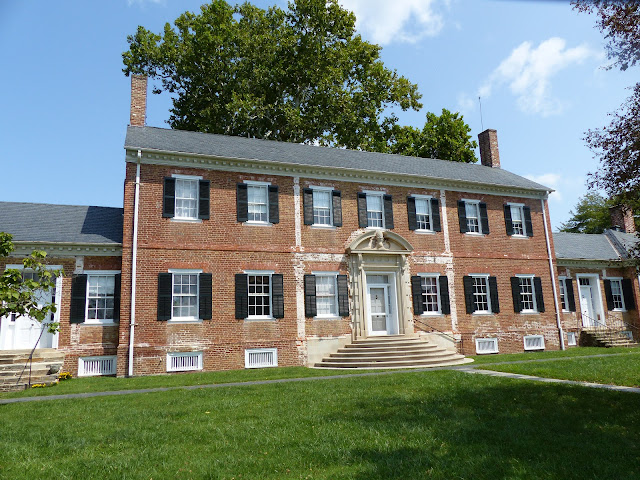
One, we visited Sulgrave Manor in Northamptonshire, one of the ancestral homes of the Washington family. 
The other home of note is Washington Old Hall, Washington, County Durham.            William de Hertburn exchanged his Hertburn lands for the Wassington (as Washington was called in the late 12th century) lands with the then, powerful, Bishop of Durham. William took the Wessington name which, over time, got corrupted to Washington.
We visited Washington Old Hall in 2015. I guess that visit reignited my interest in Anglo/American history.

Two, I purchased a book called 'Between Two Worlds' by Malcolm Gaskill. This book deals with the motivations and the trials and tribulations of the early English settlers in North America. It was always "touch and go" as to whether the early settlements were ever going to be successful. All of them lost nearly, or in some cases more than, half the original numbers of people who made the maiden voyages. North America, whether it was Virginia, Massachusetts or any other of the various landing places, wasn't the paradise that they dreamt of. In the first few years, even decades in some cases, the settlers' well being was worse than they had left behind in England. In theory they were free of the overbearing hand of local lords, the King and his government. But they were soon to learn that the desire for dominance, one over the other, is endemic to mankind. The religious persecution which many had sought to escape from in England took a different form in the new settlements. In many cases it was more vicious and overbearing than it had been at home. The hand of Christian charity was only extended to those who adhered to every jot or tittle of the particular schism that was running the show at the time. Those who, through human frailty or even just misfortune, failed to comply with the arbitrary rules were treated in an unmerciful fashion.

But this, somewhat ironic, religious intolerance was the least of the early settlers problems. The greater problems were encountered in the inhospitable landscapes, however beautiful it may have looked in spring, summer or autumn, it was wild and difficult to cultivate. Starvation was always close to hand. Then there were the natives; friendly at first but when they realised that these white men, with their very different customs, intended to stay and steadily take over the lands which they had roamed, so freely, before the settlers arrival, they started to resent the intrusion and took up arms.

Despite all that, the resilience and fortitude, which had sustained the would be settlers during the difficult months of the Atlantic crossing, enabled them to overcome all the initial hardships.During the second half of the seventeenth century the English settlements did, for the landed gentry and their senior employees, come to resemble the paradises which their founders dreamed that they would be, Sadly, it is unlikely that many of the natives would have agreed with that description, their paradise had been levered from them. Their fate would be replicated around the globe, wherever the highly developed (?) Europeans, whether they were from the British Isles, France, Spain or Portugal, cast their covetous eyes, lay destruction of centuries old cultures. 
It would, also, have been hard to convince the thousands of slaves, snatched from the west coast of Africa, that they had landed in paradise; hell would have been the first place to have sprung to their lips.

All these unpalatable facts are dealt with very sympathetically in the Jamestown Settlement living museum.

This is not intended to be a history lesson or a commentary on European colonialism: however, in reading about and visiting the original settlements, one cannot ignore the fact that the much lauded story of the English settlement of North America, leading to the creation of the world's greatest nation, had terrible consequences for the native peoples.
A consequence that is not forgotten - see the Plymouth section of this blog.

And now to the photos -

Williamsburg Va.


Photo courtesy of Williamsburg Virginia Guide.com


Enactment of first discussions about rebelling against the imposition of British Taxes 


Grand Union Flag 1775 - 1777

Jamestown Va.
(Jamestown Settlement living history museum)


.......and here is the result of my work.


Berkeley (Hundred) Plantation

As I write this on the 4th November, I am conscious of the fact that the volunteers at the Berkeley Plantation are preparing to celebrate what is now acknowledged as the first English settler's 'Thanksgiving'.on American soil 398 years ago. Or, to be exact 397 and eleven months ago because that first thanksgiving was held on 4th December 1619.

If the Jamestown Settlement living museum gives a brilliant overview of the early English settlement of this part of Virginia then the Berkeley Plantation provides a tangible link with the period in question. When I stood on the Berkeley estate's shoreline looking across the vast expanse of the majestic James River I imagined how my fellow Englishmen must have felt nearly four hundred years ago. looking at a similar scene. It was a very moving experience.


Chatham Manor, Fredericksburg Va. 

Although originating in Colonial times the story it tells is mostly about the 19th Century Civil War.


Plymouth Ma.

Landing place of the 'Pilgrim Fathers' even though it was forced upon them by bad weather, they had set out for Virginia.


Boston Ma.


The Custom House Tower


The Beaver*
Samuel Adams - Father of the Revolution

The Eleanor*


Quincy Market built 1825
* Replicas of two of the the three ships, carrying chests of tea from London, that were raided by colonists protesting against the 'tea tax' imposed by the British Government.
The third ship was the Dartmouth. All three ships had been built in the Boston Area and were owned by Bostonian merchants. The Beaver and Dartmouth were whalers based in the whaling port of Nantucket. They would have sailed to London with cargoes of valuable whale oil used for making candles. They returned with chests of East India Company tea in order to defray the costs of the voyage and to maximise profits for their owners.


That's all folks...............!

Hope you enjoyed the blog and that it will encourage you to do your own research into this fascinating subject.

Nick

Links -

Sulgrave Manor -


If you are interested in Classic Cars you might enjoy my website -


Work in progress, keep checking back .......